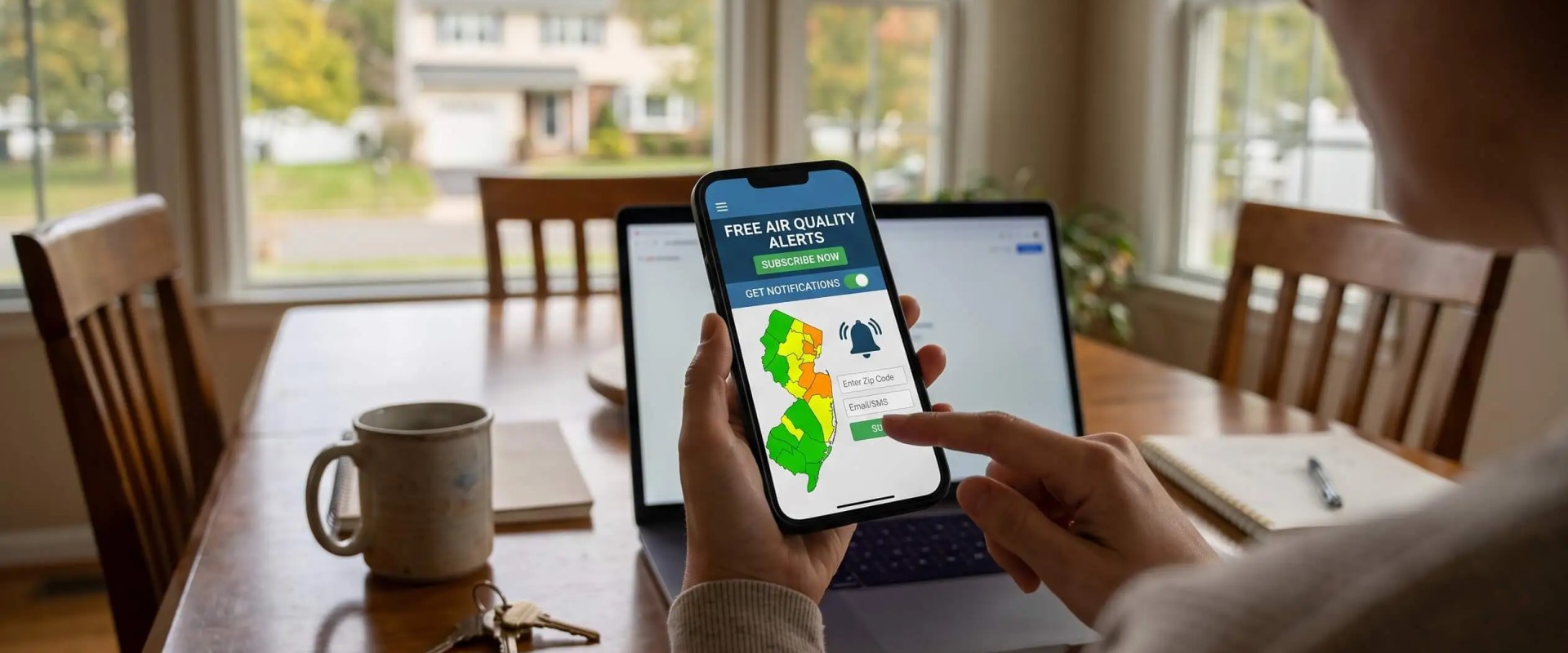
NJDEP posts tomorrow’s air quality forecast every afternoon, so a Code Orange warning can reach your phone before dinner, hours ahead of the ozone itself. Don’t take your air for granted!
From the front porch, most bad air days in New Jersey look perfectly ordinary. The ozone building along the Turnpike corridor stays invisible until someone with asthma starts coughing. I use four free public alert channels and one live map to see it coming, and every one of them reaches a phone. Here’s how I set up each one, so your household gets the same head start on air quality in New Jersey.
TL;DR Quick Answers
air quality New Jersey
NJDEP monitors air quality in New Jersey statewide and forecasts it each afternoon for the next day on EPA’s 0 to 500 AQI scale. Summer ozone and Canadian wildfire smoke cause most bad days. Free alerts from EnviroFlash, the AirNow app, and Nixle texts let you act before the bad air arrives.
Check the forecast early: NJDEP posts tomorrow’s AQI in the afternoon, which gives you an evening to plan.
Know the codes: Code Orange (101 to 150) affects sensitive groups, and Code Red (151 to 200) affects everyone.
Get free alerts: Sign up for EnviroFlash, turn on AirNow push notifications, or text your ZIP code to 888777.
Watch the hot spots: Gloucester County logged the most unhealthy ozone days in the state in State of the Air 2026.
Protect your indoor air: Close the windows on alert days and run the best filter your HVAC system can handle. Replacing an AC air filter regularly helps maintain proper airflow and capture airborne particles that could otherwise circulate through your home.
Top Takeaways
Alerts arrive early: NJDEP posts forecasts the afternoon before, so you get an evening to plan.
EnviroFlash handles email and text: Choose your AQI threshold and turn on Action Day notices.
AirNow pushes straight to your phone: Save up to 10 locations, from home to the ball field.
One text sets up a backup: Send your ZIP code to 888777 for local Nixle alerts.
Protect the air inside, too: Close the windows and keep ozone-producing devices off while a good filter does the work.
Why New Jersey Air Quality Alerts Matter
Two of the country’s largest ozone sources sit on either side of the state. Emissions from the New York City metro drift in from the north, and Philadelphia’s ride summer winds in from the southwest. The American Lung Association’s State of the Air 2026 report ranked the New York-Newark metro 12th worst in the nation for ozone, and Gloucester County logged more unhealthy ozone days than any other New Jersey county.
Canadian wildfire smoke adds a second threat with no calendar. It has drifted into New Jersey in several recent summers, and in July 2026 NJDEP called a Code Red day for Gloucester, Camden, and northwestern Burlington Counties. You can’t see either pollutant at typical levels. An alert makes it visible. Air purifiers can then help reduce airborne particles indoors, giving your family an extra layer of protection when outdoor air quality worsens.
How New Jersey’s Air Quality Color Codes Work
Every New Jersey alert traces back to the Air Quality Index, a 0 to 500 scale where a higher number means dirtier air. NJDEP uses the six federal colors and names its alerts after them. These are the ones you’ll hear most often.
Code Yellow (51 to 100): Acceptable for most people, though unusually sensitive people may notice effects.
Code Orange (101 to 150): Unhealthy for sensitive groups, including children, older adults, and anyone with asthma or heart disease.
Code Red (151 to 200): Unhealthy for everyone, and sensitive groups can feel more serious effects.
Air Quality Action Day: NJDEP’s name for a day when ozone or fine particles may reach unhealthy levels.
Five Free Ways to Get Air Quality Alerts in New Jersey
Every option below costs nothing, and you can finish all five in one evening.
Sign Up for EnviroFlash Email or Text Alerts
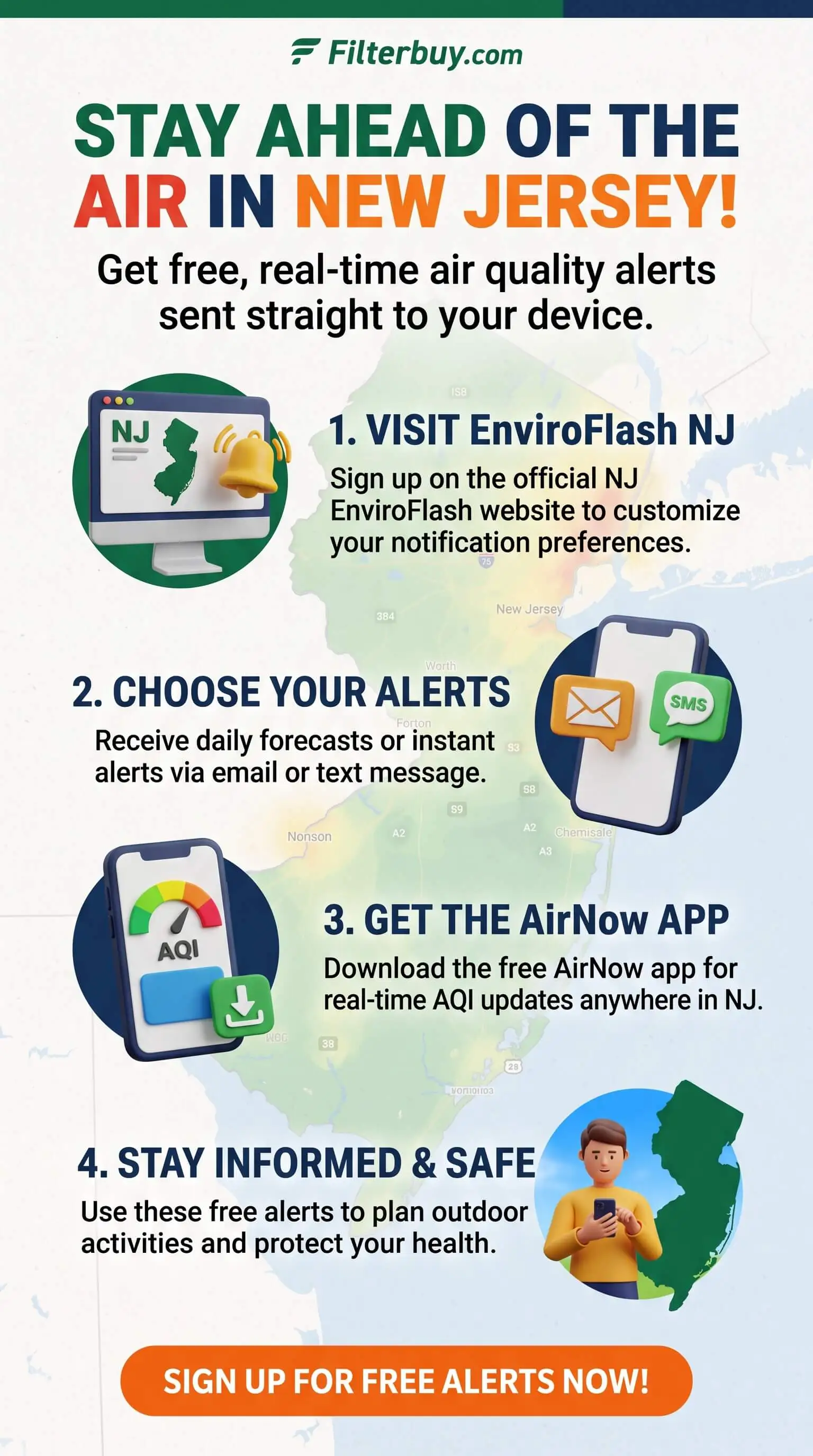
EPA and NJDEP run EnviroFlash together, and it delivers forecast and Action Day alerts by email or text.
Open the EnviroFlash sign-up page.
Type in your email address. For texts, use your mobile carrier’s text address instead.
Enter your ZIP code and confirm the nearest New Jersey forecast city.
Tick the box for Action Day notifications.
Set the lowest AQI level you want a forecast for, then confirm your address from your inbox.
Turn On AirNow App Push Notifications
EPA’s AirNow app is free on iPhone and Android, and it pushes a notification whenever tomorrow’s forecast hits the category you choose. Allow notifications for the app in your phone settings first. Then open the menu, tap Notifications, and save up to 10 locations, like home and the high school where practice runs late. On smoke days, the built-in Fire and Smoke Map shows conditions as they shift hour to hour.
Text Your ZIP Code to 888777 for Local Nixle Alerts
Plenty of New Jersey police departments and emergency management offices already relay NJDEP Action Day notices through Nixle. Text your ZIP code to 888777, and alerts from participating local agencies start arriving by text with no app to install. This year, agencies in Middletown Township, Maple Shade, Wildwood Crest, and Hackensack all sent air quality alerts this way.
Turn On Air Quality Alerts in Your Weather App
The National Weather Service relays NJDEP alerts as official Air Quality Alert messages, and most weather apps pass them along. NWS New York covers Bergen, Passaic, Hudson, Essex, and Union Counties, and NWS Mount Holly handles the rest of the state, from Sussex to Cape May. Open your app’s alert settings and switch on air quality alerts. Storm warnings alone won’t catch a Code Red.
Bookmark a Live New Jersey AQI Map With Alert Sign-Up
A forecast warns you about tomorrow, while a map shows every county as it stands right now. When I want current readings and a backup alert in one place, I pull up this live air quality map for New Jersey, which has a free email and ZIP code alert form built into the page.
Which Alert Level Should You Choose?
Set your alert at Code Orange if anyone in your home has asthma, COPD, or heart disease, is pregnant, is an older adult, or is a kid who plays outdoor sports. Everyone else can usually wait for Code Red.
What I Do When an Air Quality Alert Hits My Phone
An alert only earns its spot on your phone if it changes your plans. On any Code Orange or worse day, I stick to the same routine.
Close up early: I shut the windows the evening before, while the air inside is still clean.
Run the filter: The HVAC fan stays on with the highest-rated filter my system can handle, which in many homes means MERV 8 filters.
Shift outdoor plans: Workouts and yard work move indoors or to early morning, before the ozone builds.
Leave ozone makers off: On an ozone Action Day, an ozone-producing ionizer adds more of the same pollutant indoors.
Pro Tip: Pull your filter the day after a smoke alert lifts. If it looks noticeably grayer than it did a week ago, you’re looking at the smoke your HVAC system caught.
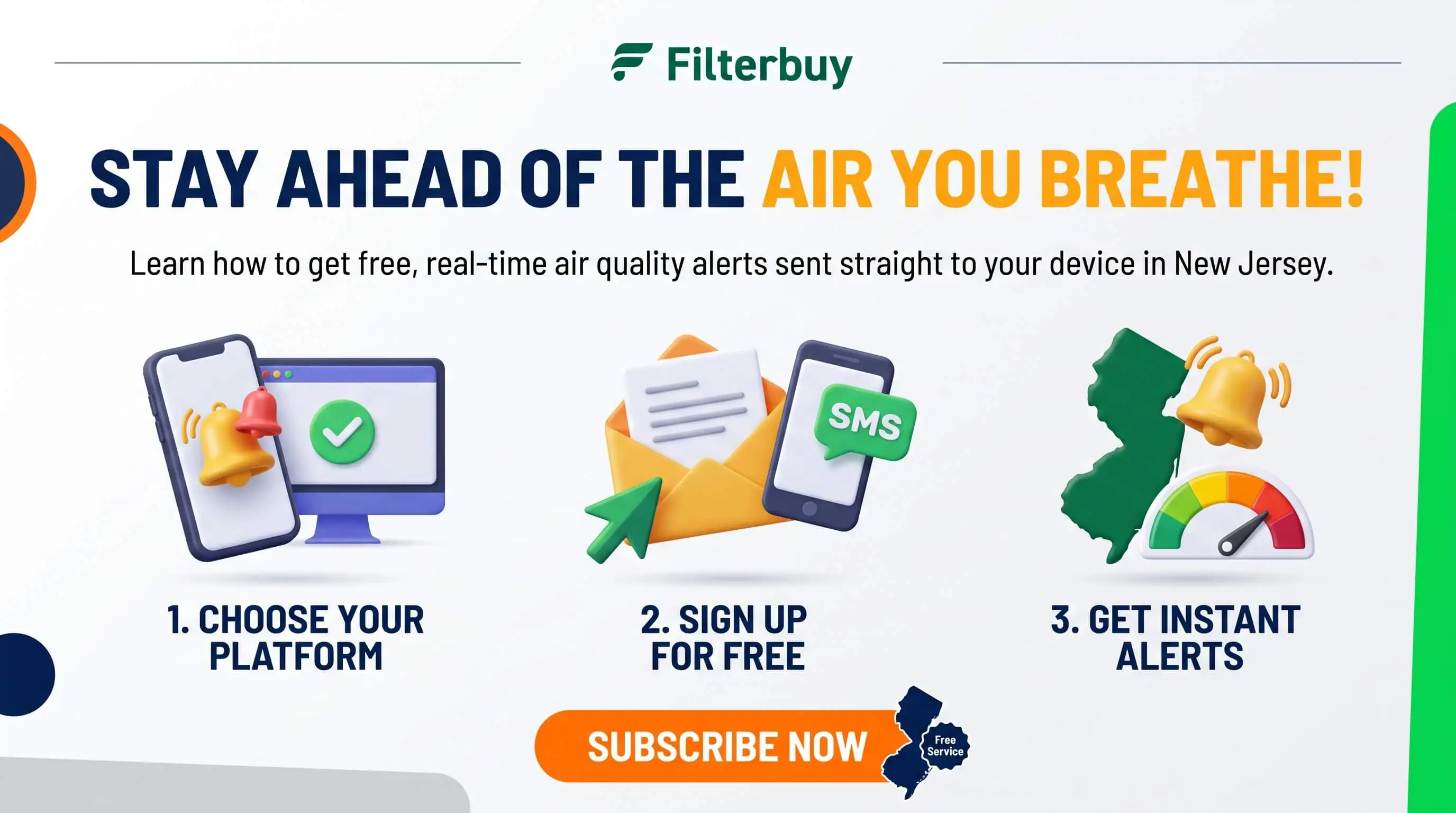
“In my experience, the New Jersey alert that matters most arrives the afternoon before the bad air, while there’s still daylight to act. Sunlight cooks traffic and industrial emissions into ozone on hot, still days, so levels peak after lunch. When the forecast lands around dinnertime, a family has the whole evening to close up the house and swap out a loaded filter. The coach can move tomorrow’s practice indoors, too.”
7 Essential Resources
NJDEP: What’s Your Air Quality Today? breaks down the state’s AQI colors and forecast timing, plus how EnviroFlash alerts work.
EPA AirNow Mobile App walks through the free app, its forecast notifications, and the built-in Fire and Smoke Map.
NWS Mount Holly Air Quality Statement posts the daily air quality forecast for much of New Jersey.
CDC: About Air Quality connects air pollution to health effects and points you to free AQI alerts.
EPA: Ozone Generators That Are Sold as Air Cleaners explains why devices that create ozone do little to clean indoor air.
Nemours KidsHealth: Air Pollution and Asthma gives parents practical steps for poor air days, from timing outdoor play to updating an asthma action plan.
NIEHS: Asthma sums up federal research on asthma and the environmental triggers behind flare-ups.
3 Statistics
706,882 children: More than 706,882 New Jersey children live in areas with unhealthy air pollution, and the New York-Newark metro ranked 12th worst in the nation for ozone. Source: American Lung Association
Over 37 million people: When Canadian wildfire smoke rolled south in June 2025, forecasters expected more than 37 million Americans to face air rated Unhealthy for Sensitive Groups or worse. Source: U.S. Census Bureau
28 million: Over 28 million people in the United States have asthma, and air pollution is a documented trigger. Source: Asthma and Allergy Foundation of America
Final Thoughts and Opinion
Most people I know check air quality the way they check a pollen count, if they remember at all. That habit doesn’t hold up in New Jersey. Ozone and smoke run on separate schedules, and neither shows itself at the levels that matter most for kids and anyone with asthma.
I’d set up two channels instead of one. An email can land in a promotions folder, and a phone can sit silent. Pair EnviroFlash or the AirNow app with a Nixle text, and a Code Red day won’t slip past your household. While air purifying plants can add greenery to your home, they aren't a substitute for proper air filtration when outdoor pollution reaches unhealthy levels.
Frequently Asked Questions
Is There a Free Air Quality Alert App for New Jersey?
Yes. EPA’s AirNow app costs nothing on iPhone or Android, and it sends a push notification when tomorrow’s forecast reaches the level you pick. NJDEP feeds its forecasts into the same national system, so New Jersey readings show up in the app.
How Do I Get Air Quality Alerts by Text in New Jersey?
You have two free options. EnviroFlash can send its forecast and Action Day notices to your phone as a text, and many New Jersey towns relay NJDEP alerts through Nixle. Text your ZIP code to 888777 for local Nixle messages.
What Is a Code Orange Air Quality Day in New Jersey?
Code Orange means NJDEP expects the AQI to land between 101 and 150, which is unhealthy for sensitive groups. Children, older adults, and people with asthma, COPD, or heart disease should cut back on long or heavy outdoor exertion. Most healthy adults feel little at this level.
When Does New Jersey Issue Air Quality Forecasts?
NJDEP usually issues forecasts in the afternoon for the next day. Ozone forecasts matter most from late spring through summer, when hot, sunny, still days cook up smog. Smoke alerts follow the wildfires, so they can come any time during the warm season.
Do New Jersey Air Quality Alerts Cover Wildfire Smoke?
Yes. Smoke drives up fine particle (PM2.5) levels, and NJDEP calls Action Days for fine particles just as it does for ozone. The AirNow app’s Fire and Smoke Map tracks fast-changing smoke conditions hour by hour.
Should I Run an Ionizer on an Air Quality Alert Day?
Not one that produces ozone. EPA reports that ozone generators do little to clean indoor air and can push ozone past health limits. On an ozone Action Day, keep the windows shut and rely on mechanical filtration, such as a high-MERV HVAC filter or a HEPA purifier.
Set Up Your Free New Jersey Air Quality Alerts
You’re already the one who keeps everyone under your roof safe, and free air quality alerts in New Jersey from EnviroFlash, the AirNow app, and a single text to 888777 make that job easier. Knowing the AQI meaning behind each alert helps you recognize when outdoor air may become unhealthy. Set them up once at the level that fits your household, and let each forecast tell you when to close the windows so your family can breathe easier.