
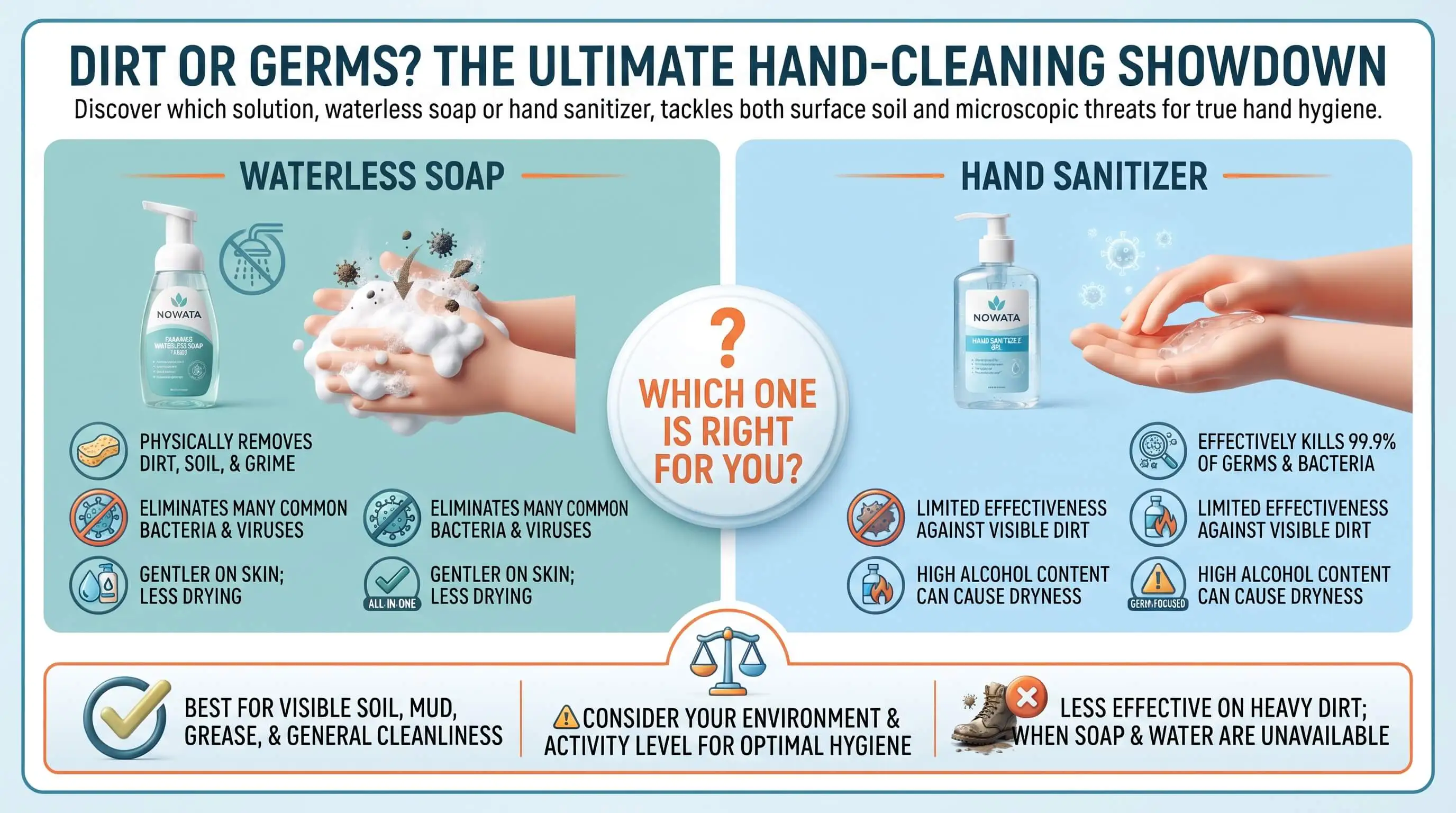
Here's the short version of waterless soap vs hand sanitizer. Sanitizer is built to kill many germs. It is not built to remove dirt. Waterless soap is designed to lift dirt, oil, and germs off your skin so you can wipe or brush them away. That difference matters most when your hands are both dirty and germy at the same time, which, if you have kids, a garden, or a commute, is most of the time.
Below, you'll see how each one works, where each one falls short, and which to reach for in real-life moments.
TL;DR Quick Answers
Waterless Soap vs Hand Sanitizer
Waterless soap removes dirt, oil, and germs from your hands. Hand sanitizer kills many germs but leaves dirt and grime in place. When hands are dirty and germy at once, waterless soap handles both.
How each works: Waterless soap physically lifts grime and germs so you can brush them off. Sanitizer uses at least 60% alcohol to kill germs on the skin.
On dirty hands: The CDC says sanitizer may not work as well on visibly dirty or greasy hands. Waterless soap is built for them.
Sanitizer's best use: Quick germ control on hands that already look clean.
Still use a sink: After the bathroom, raw meat, or heavy grease.
Simple rule: Remove visible dirt first, then deal with germs.
Top Takeaways
Hand sanitizer kills many germs but does not remove dirt, oil, or the germs it misses.
The CDC says sanitizer may not work as well on visibly dirty or greasy hands.
Waterless soap is designed to lift dirt, oil, and germs off the skin so they can be wiped or brushed away.
Dirt first, germs second: remove visible grime before anything else.
For heavy grease, raw food, or after the bathroom, soap and running water remain the gold standard.
Alcohol-free waterless soap is a practical choice for families with young kids.
Clean Air Is Only Half the Story
Air purifiers and ionizers go after what floats. Your hands deal with what you touch. Germs are pathogens, meaning viruses, bacteria, fungi, and other microbes that can cause disease, and one of the ways they spread is through contaminated surfaces and objects. Door handles. Shopping carts. Car seats. Your hands collect them all day.
So clean hands are the other half of a healthy indoor environment. The question is which tool gets them clean when there's no sink.
How Hand Sanitizer Works, and Where Dirt Gets in the Way
Alcohol-based hand sanitizer kills many germs on contact. The CDC recommends one with at least 60% alcohol, rubbed over every surface of your hands until dry. It works well in places like hospitals, where hands touch germs but rarely get grimy.
Here's the catch. Sanitizer doesn't remove anything. Dirt, oil, and the germs it didn't reach stay right where they were. The CDC states plainly that hand sanitizer may not work as well when hands are visibly dirty or greasy, and that soap and water do a better job against certain germs like norovirus, Cryptosporidium, and C. difficile.
What does "visibly dirty" look like? The CDC's own examples: handling food, playing sports, working in the garden, camping, and fishing. In other words, everyday life. A layer of grime can shield germs from the alcohol, which is why health departments tell you to remove visible dirt before you sanitize.
How Waterless Soap Works Without a Sink
Waterless soap takes a different approach. Instead of killing germs in place, it's designed to physically lift them off. You rub it in, it binds to dirt, oil, and germs, and then you wipe or brush the residue away. No rinse required.
NOWATA's rinse-free formula, for example, uses what the brand calls clumping technology: the product grabs onto grime and germs and forms small clumps that brush off your skin. It's alcohol-free and plant-based. For a deeper look at the germ-removal side of waterless soap vs hand sanitizer, including lab results, NOWATA breaks down the comparison in detail.
Waterless Soap vs Hand Sanitizer at a Glance
One removes. One kills. That's the core difference.
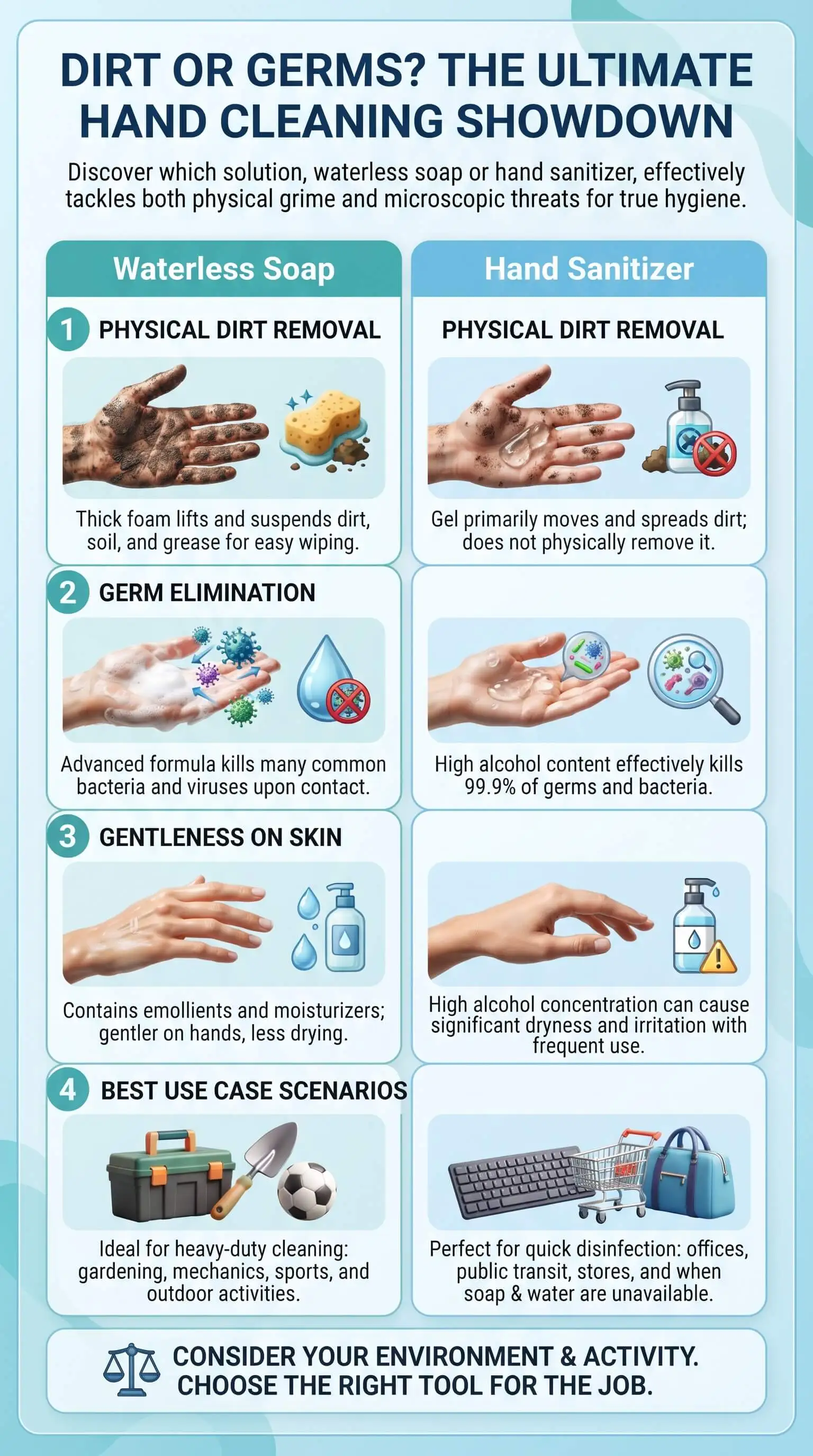
How it works: Waterless soap lifts dirt, oil, and germs so they can be wiped or brushed off. Hand sanitizer uses alcohol to kill many germs on the skin.
Visible dirt: Waterless soap is designed to remove it. Hand sanitizer does not remove it and may not work well on dirty hands.
Grease and oil: Waterless soap handles light grease. Hand sanitizer is not effective.
Germs: Waterless soap physically removes them. Hand sanitizer kills many, but not all types.
Residue left behind: With waterless soap, it's brushed away. With hand sanitizer, dirt and dead germs stay on the skin.
Alcohol: Waterless soap is often alcohol-free. Hand sanitizer is usually 60% alcohol or more.
Best for: Waterless soap suits sticky, grimy, everyday-dirty hands. Hand sanitizer suits quick germ control on clean-looking hands.
Can Either One Handle Dirt and Germs at the Same Time?
Waterless soap can, within limits. Sanitizer can't. Here's how that plays out.
Light, Everyday Dirt
Dust, playground grime, sticky snack fingers, crumbs from the car seat. This is where waterless soap shines. It removes the dirt and the germs riding on it in one step. Sanitizer only goes after the germs and leaves the mess.
Heavy Grease, Mud, and Raw Food
Be honest with yourself here. After changing the oil, digging in wet soil, or handling raw chicken, soap and running water are still the best choice. Waterless soap is a solid stopgap until you reach a sink. Sanitizer is the weakest option of the three.
Germs That Alcohol Struggles With
Norovirus is the classic example. The CDC favors soap and water over sanitizer for it. Because waterless soap works by removal rather than alcohol, it doesn't depend on a germ being sensitive to alcohol in the first place.
Which One Should You Reach For?
After the playground: waterless soap. Kids' hands are dirty and germy at once.
Before a snack in the car: waterless soap, especially if hands look or feel sticky.
After gardening or yard work: remove the soil with waterless soap, then wash at a sink when you can.
After using the bathroom: soap and water at the sink. Every time.
Visiting a hospital or care home: sanitizer works well here, because hands usually look clean.
Camping or hiking: waterless soap for meals and grime; save water for drinking.
Quick touch of a shopping cart: either works if your hands are clean.
Using Them Together the Right Way
Dirt first. Germs second. If your hands are visibly dirty, remove the grime before anything else. Then, if you want an extra step, use sanitizer and rub until it's completely dry. When a sink turns up, wash with soap and water.
Skin Feel, Residue, and Little Hands
Alcohol can leave skin dry, especially with frequent use. Sanitizer also needs careful storage. Swallowing it is a real risk for young children, so keep it out of reach. Many parents prefer an alcohol-free waterless soap for kids for exactly that reason, and because it leaves hands clean rather than coated.
"I spent years treating hand hygiene as a germ problem only. Then I started paying attention to what my hands actually looked like when I reached for sanitizer: dust from the car, juice from my kid's cup, soil from the planters. Almost every time, there was visible dirt. That changed how I see the whole debate. Sanitizer is a good tool when your hands look clean. But most real-life moments start with dirt, and alcohol doesn't move dirt. In my own routine, the rule is simple: if I can see it or feel it, I remove it first. A rinse-free soap handles that in under a minute, and it doesn't leave the tacky film I used to get from layering sanitizer over grime. I still head straight for a sink after the bathroom or raw meat. Nothing replaces that. Everywhere else, removal beats coverage."
7 Essential Resources
CDC: Hand Sanitizer Guidelines and Recommendations. The baseline. Explains that soap and water remove all types of germs while sanitizer kills certain germs, and that sanitizer may not work as well on visibly dirty or greasy hands.
CDC: Hand Sanitizer Facts. The science behind the guidance, including everyday activities like gardening, sports, and camping that leave hands too soiled for sanitizer to work well.
Minnesota Department of Health: Cleaning Hands with Hand Sanitizer. A clear, step-by-step explainer that makes the dirt-first rule explicit: remove visible organic matter before you sanitize.
FDA: Safely Using Hand Sanitizer. Practical safety tips from the agency that regulates sanitizer, including supervising children and keeping it away from eyes and flames.
Liu et al., Effectiveness of Liquid Soap and Hand Sanitizer against Norwalk Virus on Contaminated Hands. A peer-reviewed study showing why removal matters for norovirus, a germ alcohol struggles with.
CDC: Hand Hygiene Frequently Asked Questions. Quick, authoritative answers on sanitizer strength, wipes, drying, and when each method fits.
HRSA Poison Help: Guide to Disinfectants, Cleaners and Sanitizers. A must-read for parents on safe sanitizer storage and use around children.
3 Statistics
16% to 21%. Handwashing education reduces respiratory illnesses, like colds, in the general population by 16 to 21%, according to the CDC's handwashing facts. Removing germs from hands, not just treating them, is what drives that benefit.
At most 0.5 log. In a peer-reviewed study of Norwalk virus, ethanol was relatively ineffective regardless of concentration, achieving at most a 0.5 log reduction (roughly 68%) in viral genetic material (Liu et al., Applied and Environmental Microbiology). Alcohol alone has real limits.
64% and 69%. In spring 2020, the Texas Poison Center Network saw a 64% increase in calls about accidental hand sanitizer ingestion compared with the year before, and 69% of those calls involved children under 5 (Texas DSHS Health Advisory). For families, that's a strong case for an alcohol-free option.
These findings highlight the importance of effective hand hygiene, the limitations of alcohol-based sanitizers, and why an alcohol-free, waterless hypoallergenic hand soap is an option worth considering for everyday hand care.
Final Thoughts and Opinion
The waterless soap vs hand sanitizer debate usually gets framed as a germ contest. That misses the point. Real hands are rarely just germy. They're dusty, sticky, oily, and germy all at once.
Our view is simple. Hand sanitizer is a useful tool for one job: killing many germs on hands that already look clean. It was never designed to deal with dirt, and the CDC says as much. Waterless soap is the better everyday pick when there's no sink, because it removes what's on your hands instead of leaving it there. And when hands are truly filthy, or after the bathroom or raw meat, a sink with soap and water still wins. No product changes that.
If you care enough about clean air to run a purifier, give your hands the same respect. Remove first. Then decide whether you need anything else.
Frequently Asked Questions
Does hand sanitizer remove dirt from your hands?
No. Hand sanitizer kills many germs, but it doesn't lift dirt, grease, or grime off your skin. The CDC notes that sanitizer may not work as well when hands are visibly dirty or greasy. If you can see or feel dirt, remove it first, then sanitize if you want an extra step.
Is waterless soap the same thing as hand sanitizer?
No. Hand sanitizer relies on alcohol to kill germs where they sit. Waterless soap is designed to lift dirt, oil, and germs off your skin so you can wipe or brush them away. One kills in place. The other removes. That's why they behave so differently on dirty hands.
Can I use hand sanitizer after wiping off visible dirt?
Yes. Once visible dirt is gone, sanitizer can reach your skin. Use enough to cover every surface of your hands and rub until completely dry. Then wash with soap and water as soon as you have access to a sink, especially if your hands are heavily soiled.
What should I use on greasy or muddy hands when there's no sink?
Remove as much grime as you can with waterless soap or a wipe. Sanitizer alone won't do much on greasy or muddy hands. Treat it as a stopgap, and wash with soap and running water at the first chance you get.
Does waterless soap work on germs that hand sanitizer misses?
The CDC says soap and water beat sanitizer against germs like norovirus, which alcohol struggles to kill. Waterless soap works by physical removal rather than alcohol. NOWATA reports lab testing showing over 99.9% removal of virus and bacteria particles, though the brand notes that result does not imply disease prevention.
Which is better to keep in a car or diaper bag?
Waterless soap is the better everyday pick for sticky, dirty hands, which is most of what happens in a car or on an outing. Sanitizer handles quick germ control on hands that already look clean. Many families keep both, with the alcohol-based one stored out of children's reach.
Ready to Clean Your Hands, Not Just Coat Them?
You already work to keep the air in your home clean. Your hands deserve the same care. If you're weighing a rinse-free option for the car, the diaper bag, or the trail, see how NOWATA's waterless no rinse hand soap stacks up against sanitizer on germs, with the lab data and the full breakdown, before you buy your next bottle.